
Garage Versus Mobile Mechanic: Which Fits?
October 17, 2026
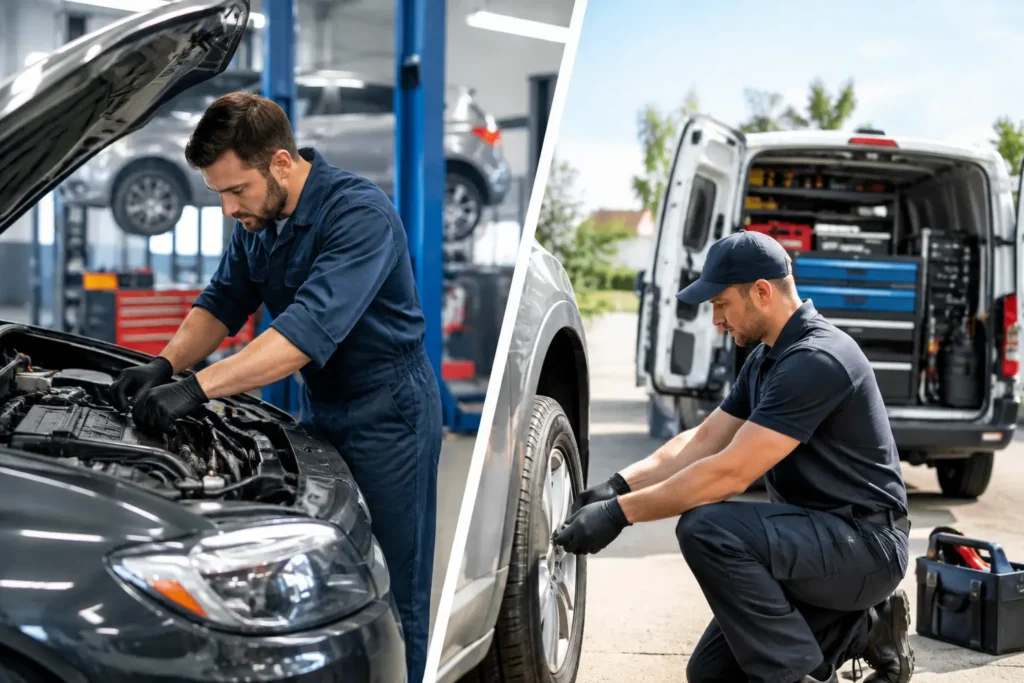
A vehicle problem rarely happens when you have time to spare. You may be stuck at home before work, parked at a job site with a truck that will not start, or dealing with a warning light after hours. The garage versus mobile mechanic decision comes down to more than convenience. It affects towing costs, downtime, diagnostic options, and how quickly you can get back on the road.
For many repairs, bringing the mechanic to the vehicle is the practical answer. For others, a traditional garage has equipment and space that cannot be replaced. Knowing the difference helps you make a smart call before a small problem turns into a longer, more expensive interruption.
Garage Versus Mobile Mechanic: The Main Difference
A garage requires you to bring the vehicle to a fixed location. That can mean arranging a ride, waiting for an opening in the shop schedule, or paying for a tow if the vehicle is unsafe or unable to drive. Once it is there, the shop has access to lifts, large equipment, parts inventory, and a controlled work area.
A mobile mechanic comes to your driveway, workplace, roadside location, or job site. The technician arrives with diagnostic equipment, tools, and the parts needed for the scheduled repair when possible. This approach removes the trip to the shop and lets you stay closer to your day instead of building your schedule around a repair appointment.
Neither option is automatically better. The right choice depends on the condition of the vehicle, the type of repair, the work environment, and how urgently you need help.
When a Mobile Mechanic Makes the Most Sense
Mobile service is built for problems that can be diagnosed and repaired safely where the vehicle is parked. It is especially useful when the vehicle will not start, when a truck is down at a work location, or when driving to a garage could create more damage or risk.
You want to avoid towing and waiting rooms
If your vehicle cannot move, getting it to a garage adds another step before diagnosis even begins. A mobile mechanic can inspect the problem on-site, explain what is wrong, and move forward with an appropriate repair plan. That can save time, prevent extra coordination, and eliminate the stress of finding transportation while your vehicle is in the shop.
For busy drivers and small business owners, the real cost of a repair is not only the invoice. It is lost work time, missed appointments, delayed deliveries, and the hassle of leaving a vehicle somewhere unfamiliar. On-site service can reduce that disruption.
Your truck or work vehicle is tied to your income
A work truck sitting in a driveway or at a job site is not just inconvenient. It can stop the day before it starts. Mobile repair gives owners a chance to address common mechanical and electrical concerns where the truck is needed, without pulling it out of service for an unnecessary trip across town.
This does not mean every truck issue can be completed on-site. It does mean you can get an experienced set of eyes on the problem quickly and determine the next move with better information.
You need help outside normal shop hours
Breakdowns do not follow business hours. A service that offers around-the-clock availability can be a major advantage when a vehicle issue happens early in the morning, late at night, or on a weekend. Fast response matters when you are stranded, but it also matters when you need to know whether the vehicle is safe to drive.
A reliable mobile technician should be direct about what can be handled immediately, what parts may need to be sourced, and whether the vehicle should stay parked. Clear answers are more useful than guesses when time is tight.
When a Garage Is the Better Choice
A good mobile mechanic knows when a garage is necessary. That is not a weakness. It is the right call when the repair requires heavy lifting equipment, specialized machines, a long inspection process, or conditions that cannot be handled safely outside.
The repair needs a lift or major disassembly
Some under-vehicle repairs require access that is only practical with a full vehicle lift. Jobs involving extensive suspension work, major drivetrain removal, structural concerns, or large-scale exhaust repairs generally belong in a garage. A shop also provides the space to keep parts organized during a complex job that may take more than one day.
The diagnosis requires specialized shop equipment
Modern vehicles can have difficult electrical, fuel, engine, or emissions-related problems. A mobile mechanic can perform many diagnostics on-site, but certain cases need equipment that is too large or specialized to transport. A garage may also have manufacturer-level tools or testing systems needed to confirm an uncommon fault.
The key is not assuming that a warning light automatically requires a shop. It means getting an honest assessment of whether mobile diagnostics can identify and correct the problem at your location.
Weather, space, or safety creates a problem
A mobile repair needs a safe place to work. Tight parking areas, steep driveways, heavy traffic, poor lighting, severe weather, or unstable ground can limit what can be done properly. The technician should never force a repair in an unsafe setting just to finish on-site.
In those situations, a garage can offer a controlled environment that protects the vehicle, the technician, and the quality of the work.
Cost Is More Than the Repair Price
People often compare a garage estimate with a mobile mechanic’s service charge and stop there. That misses the bigger picture. A traditional garage may have lower pricing on some labor-intensive jobs because its equipment and workflow are designed for them. It may also have parts on hand that reduce delays.
Mobile service may save money by avoiding a tow, reducing time away from work, and preventing the need for a second person to drive you home or back to the shop. For a disabled vehicle, those savings can be significant. The best value is the option that solves the problem correctly with the least total interruption.
Ask for a clear quote that explains the diagnostic charge, labor, parts, travel or service fees if applicable, and what happens if the issue requires shop-level work. A trustworthy mechanic will not make the price sound simpler than it is. They will explain the likely path before work begins.
What to Ask Before You Choose
You do not need to be a mechanic to make a confident decision. Start by describing the symptoms as clearly as possible: when the issue started, whether any dashboard lights appeared, unusual sounds or smells, changes in performance, and whether the vehicle is currently safe to drive.
Then ask whether the repair can be completed at your location, how soon the technician can arrive, what diagnostic process will be used, and whether parts will need to be ordered. If you operate a truck for work, mention the vehicle’s location and the downtime you can tolerate. Those details help the mechanic prepare for the job instead of arriving without the equipment or parts that matter.
It is also reasonable to ask about experience with your type of vehicle and repair. More than 20 years of hands-on mechanical experience makes a difference when diagnosing a problem that does not present itself neatly. The goal is not just replacing a part. It is finding the reason the problem happened and confirming the repair addresses it.
Choose the Service That Gets You Moving Safely
The right choice is usually straightforward. Choose mobile service when the repair can be done safely where the vehicle sits and you want to limit towing, waiting, and lost time. Choose a garage when the job requires a lift, extensive disassembly, specialized equipment, or a controlled work environment.
For Georgia drivers who need responsive on-site support, Chastain Mechanical Solutions can help assess the situation and provide practical repair options where your vehicle is located. The best first step is a clear description of the problem and an honest conversation about what the repair requires. That gives you a faster path to a vehicle you can depend on again.