
Do You Need New Rotors When You Replace Your Brake Pads?
August 25, 2026
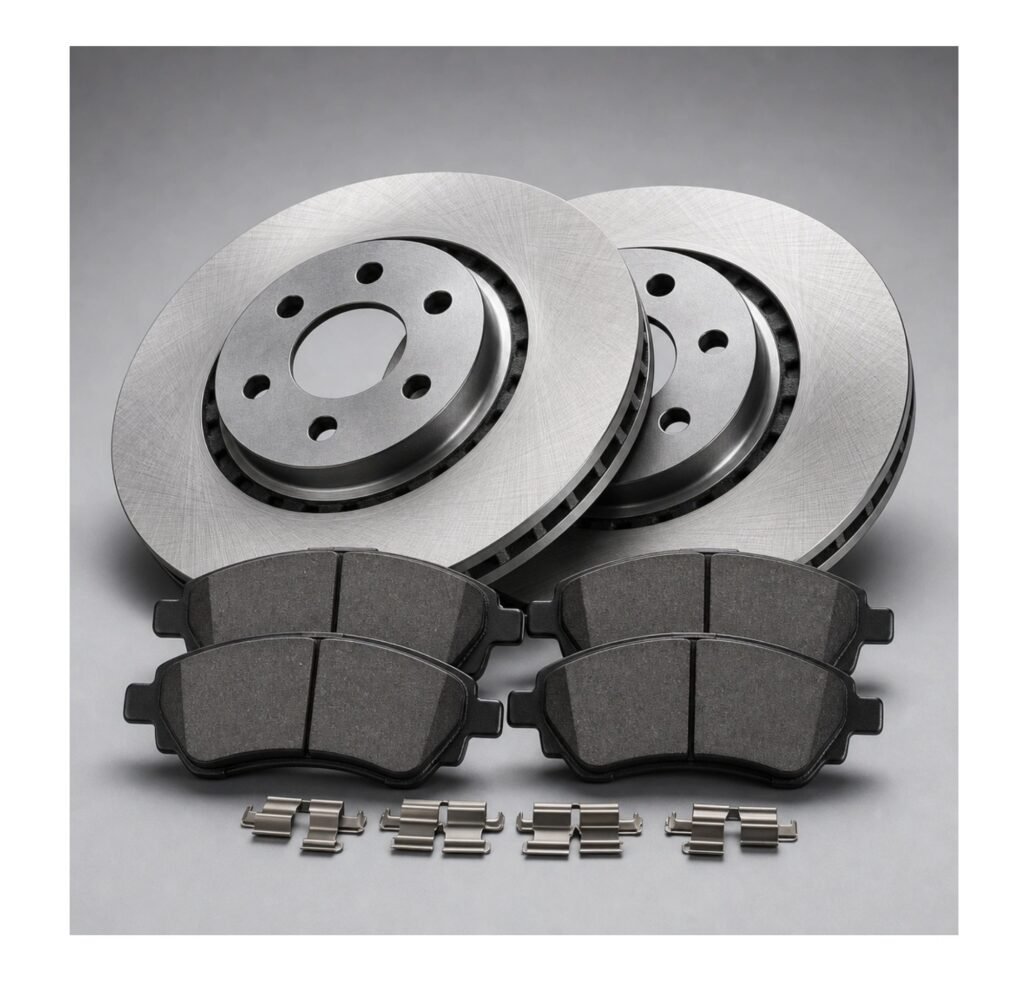
It’s one of the most common questions we get at Chastain Mechanical Solutions: “My brake pads are worn out — do I need new rotors too?” The honest answer is: sometimes, but not always. Let’s break down how to tell the difference, so you’re not paying for parts you don’t need — or skipping ones you do.
First, What’s the Difference Between Pads and Rotors?
Your brake pads are the softer, sacrificial component that presses against the rotor (the metal disc attached to your wheel) to slow the car down. Pads are designed to wear out over time — that’s their job. Rotors are built to last much longer, but they’re not indestructible. Every time your pads clamp down, they gradually wear the rotor’s surface too.
Think of it like a pencil and paper: the pencil (pad) wears down with use, but if you press too hard or use it too long, it’ll eventually mark up or damage the paper (rotor) as well.
When You Can Reuse Your Rotors
If you’re getting your brake pads replaced on a regular maintenance schedule — before they’re worn down to metal — there’s a good chance your rotors are still in fine shape. Signs your rotors may be reusable include:
- The rotor surface is smooth, with only light, even wear
- No visible deep grooves, cracks, or scoring
- The rotor thickness is still within the manufacturer’s minimum spec
- No pulsation or vibration when braking
- No unusual noise (grinding, squealing that doesn’t go away with new pads)
In these cases, a technician may simply resurface (machine) the rotors — a process that shaves a very thin layer off the surface to make it smooth and flat again — or, if wear is minimal, leave them as-is and just install new pads.
When You’ll Likely Need New Rotors
Rotors typically need to be replaced, not just resurfaced, when:
- They’re worn below minimum thickness. Every rotor has a minimum safe thickness stamped on it. Once resurfacing would push it below that number, it must be replaced — this isn’t optional, it’s a safety issue.
- You waited too long to replace your pads. If the pads wore down completely and metal was grinding against the rotor, you’ve likely got deep grooves or scoring that resurfacing can’t fix.
- You feel pulsation or vibration when braking. This is a classic sign of a warped rotor, often caused by heat buildup from hard braking or aggressive stop-and-go driving.
- There’s visible rust, pitting, or cracking, especially on cars that sit for long periods or are driven in wet climates.
- You hear a deep grinding noise. This usually means metal-on-metal contact has already damaged the rotor surface.
Why Not Just Replace Rotors Every Time?
Some shops will recommend new rotors with every pad job — and while that’s not wrong from a “better safe than sorry” standpoint, it’s not always necessary. Rotors are a bigger expense than pads, so replacing healthy ones adds cost without adding real benefit. At Chastain Mechanical Solutions, we inspect your rotors as part of every brake service and give you an honest read on whether they’re good to go, need resurfacing, or need replacing — not a blanket upsell.
A Quick Way to Think About It
Rotor Condition Recommended Action Smooth, within thickness spec Reuse as-is Light wear, still above minimum Resurface Below minimum thickness Replace Warped, cracked, or deeply grooved Replace Pads worn to metal for a long time Replace
The Bottom Line
New brake pads don’t automatically mean new rotors — but ignoring worn rotors can undo the benefit of fresh pads, leading to poor stopping power, vibration, and uneven wear. The safest approach is to have your rotors measured and inspected every time your pads are replaced.
If it’s time for a brake job, call Chastain Mechanical Solutions at 678-386-1390. We’ll inspect your pads, rotors, and calipers, walk you through exactly what your car needs, and get you back on the road with brakes you can trust.