
Free Parts Store Scan vs. a Full Diagnostic:
August 30, 2026
What’s the Real Difference?
Your check engine light comes on, so you do what a lot of people do — pull into the nearest auto parts store for a free scan. They plug in a handheld device, hand you a printout with a code on it, and maybe even tell you which part to buy. Simple, right?
Not quite. While a free parts store scan can be a helpful first step, it’s often just the tip of the iceberg — and relying on it alone can lead to buying the wrong part, fixing the wrong problem, or missing what’s actually wrong with your car. Here’s what’s really happening in each type of scan, and why a full diagnostic from an experienced mechanic makes all the difference.
What Actually Happens During a Free Parts Store Scan
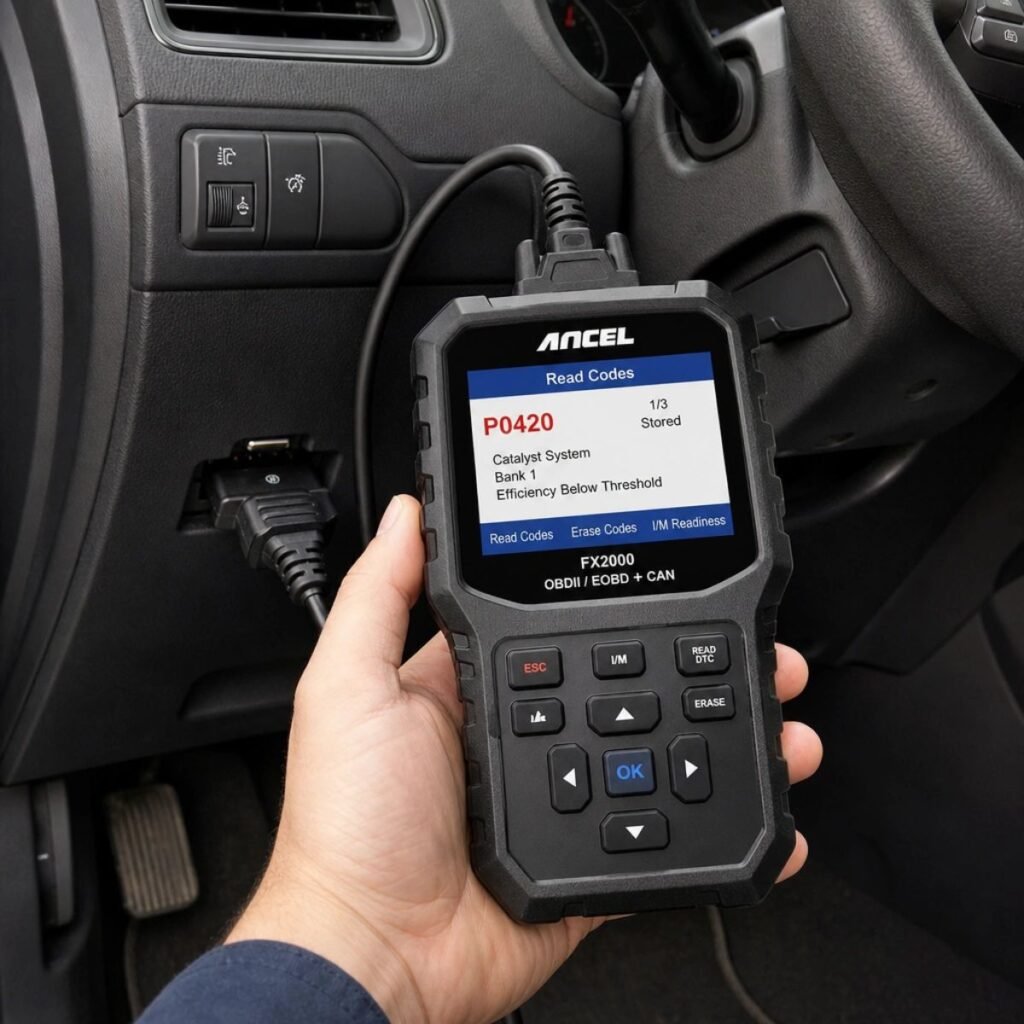
When you pull into a parts store for a free scan, an employee connects a basic OBD-II code reader to your vehicle. That device communicates with your car’s computer and pulls whatever trouble codes are currently stored — things like “P0301” or “P0420.”
Here’s the catch: a trouble code tells you what system is affected, not necessarily what’s actually broken.
For example, a code like P0301 means “cylinder 1 misfire” — but that misfire could be caused by a bad spark plug, a failing ignition coil, a vacuum leak, a fuel injector issue, or even a deeper mechanical problem. The code doesn’t tell you which one it is. It’s a starting point, not an answer.
Most parts store employees aren’t trained mechanics — their job is retail, not diagnostics. They’ll usually read you the code, maybe look up a generic possible cause online, and point you toward a part on their shelf that might fix it. Sometimes that guess is right. Often, it isn’t.
What a Full Diagnostic Actually Involves
A full diagnostic performed by an experienced mechanic goes several steps further than simply reading a code. Here’s what that typically includes:
1. Pulling and Interpreting Codes Correctly
A skilled technician doesn’t just read the code — they understand what it means in the context of your specific vehicle, its history, and other codes or symptoms present.
2. Checking Freeze Frame Data
When a code is triggered, most vehicles record a snapshot of what the engine was doing at that exact moment — RPM, temperature, load, speed, and more. This data helps pinpoint when and under what conditions the issue occurs, which a basic scan tool often doesn’t display or interpret.
3. Physical Inspection
Codes point toward a system, but a real diagnostic includes hands-on inspection: checking wiring, connectors, vacuum lines, belts, hoses, and related components for visible wear, damage, or corrosion that a scanner alone can’t detect.
4. Live Data Monitoring
Experienced mechanics often watch live sensor data while the engine runs — oxygen sensor readings, fuel trims, throttle position, and more — to see how the vehicle is actually performing in real time, not just what code got stored after the fact.
5. Testing Related Components
If a code suggests a possible cause, a mechanic will often test that specific component directly — checking resistance, voltage, or performance — rather than assuming the first likely culprit is the correct one.
6. Ruling Out Related Systems
Many vehicle systems overlap. A skilled diagnostic process considers what else could cause the same symptoms, ruling out other possibilities methodically instead of guessing based on the code alone.
Why This Difference Matters for Your Wallet
Here’s where the real cost difference comes in. Say your check engine light comes on, and a free scan gives you a code pointing to an oxygen sensor. You buy the part and install it yourself — but the actual problem was a vacuum leak. Now you’ve spent money on a part you didn’t need, and the original problem is still there (and may have gotten worse in the meantime).
A full diagnostic aims to get it right the first time — identifying the actual root cause before any money is spent on parts or labor, so you’re fixing the real issue instead of guessing your way through it.
When a Free Scan Might Be Enough
To be fair, a quick parts store scan isn’t useless. It can be a helpful first step to:
- Get a general idea of what area of the car might be affected
- Decide whether the issue seems urgent or can wait for a scheduled diagnostic
- Have some basic information on hand before calling a mechanic
Just don’t treat the printout as a final diagnosis — think of it as a clue, not a conclusion.
How Chastain Mechanical Solutions Handles Diagnostics
As a mobile mechanic, we bring the same thorough, professional diagnostic process to you — wherever your car happens to be. When your check engine light comes on, our technicians will:
- Pull and properly interpret trouble codes, not just read them at face value
- Review freeze frame and live data to understand what’s really happening
- Perform a hands-on physical inspection of related components
- Test the specific parts in question rather than guessing based on the code alone
- Give you a clear, honest explanation of what’s actually wrong and what it’ll take to fix it
No guesswork, no unnecessary parts, and no waiting around at a shop — just an accurate diagnosis delivered right at your home or office.
Skip the Guesswork
If your check engine light is on, or your car isn’t running quite right, don’t rely on a code and a guess. Chastain Mechanical Solutions brings professional, full-service diagnostics directly to you, so you know exactly what’s wrong before a single dollar gets spent on repairs.
Call 678-386-1390 to schedule your mobile diagnostic today and get an answer you can actually trust.